The Party Politics of Decentralization by Linda Basile
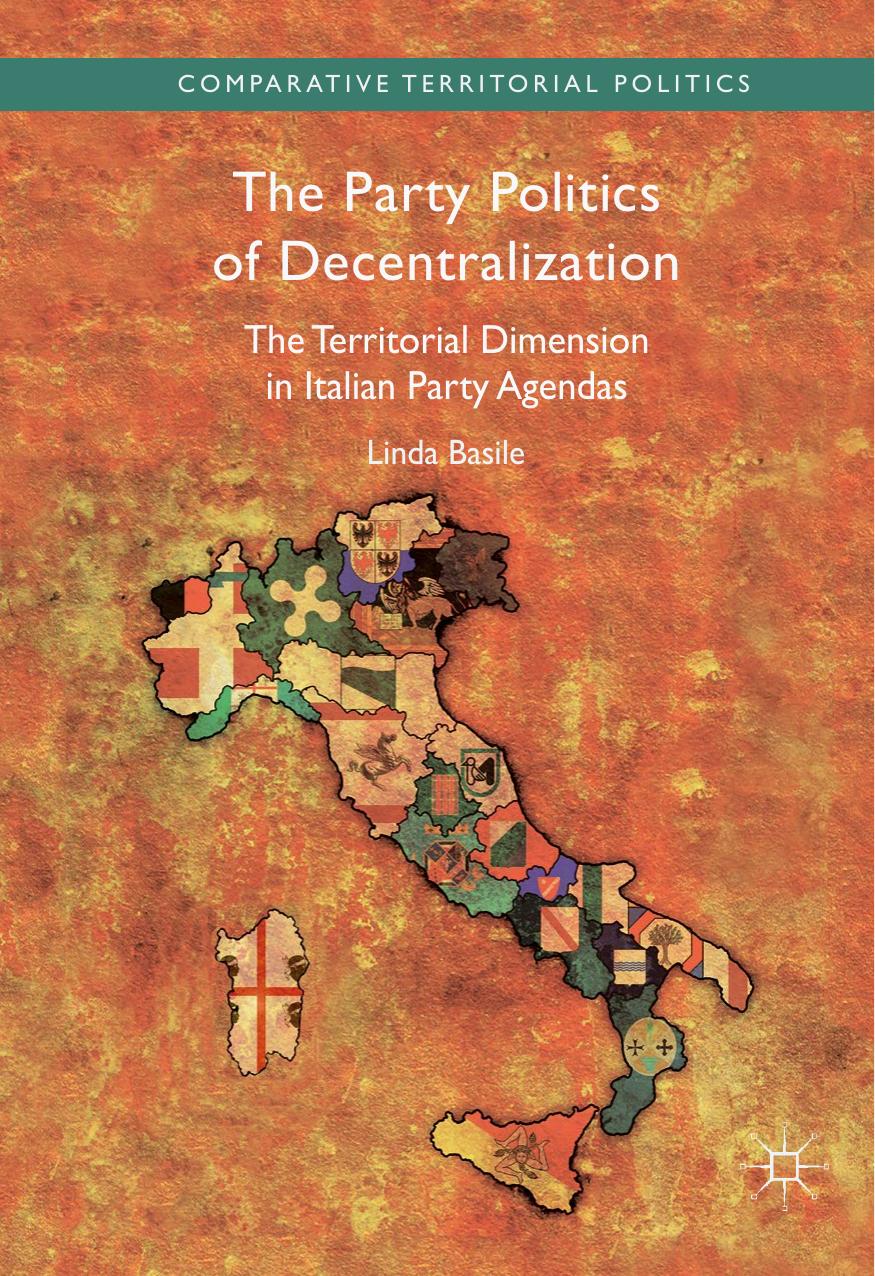
Author:Linda Basile
Language: eng
Format: epub, pdf
Publisher: Springer International Publishing, Cham
Why Do Parties Vote as They Do? Party Competition in the Parliamentary Arena
Shifting to parties’ behavior in Parliament, one would expect that parties would tend to stick to the preferences expressed in their manifestos once they enter the institutional arena. However, things are often less straightforward when political advantage is at stake, and parties’ coherence with their own pledges cannot be taken for granted. This premise raises the first question concerning party behavior in parliamentary votes on decentralist reforms: Are parties5 coherent with their electoral rhetoric on the territorial dimension?
The opening section of this chapter introduced another relevant topic—namely, that of political actors’ goal to set the rules of the game when adopting reforms concerning the institutional architecture of the state, including decentralization. Without taking any position in the normative debate on the preference of consensual or majority reforms, an analysis of the parliamentary arena poses a second question: Were decentralist reforms in Italy approved consensually or were they contested reforms?
To answer these questions, this section formulates some hypotheses to explain party voting behavior on decentralist issues. These hypotheses will connect the ideas of coherence and consensual reforms, as they are closely interrelated; a desire for coherence might lead an opposition party to vote in favor of a bill supported by the majority, leading to the approval of broadly supported laws.
In the parliamentary arena, voting strategy is likely to be influenced by a number of factors, more than can be listed here.6 First, there are obviously party preferences on specific policy issues, as expressed in their electoral rhetoric; second, there is a party’s role in government; and third, there are the features of the party and political system of a country, such as whether the party system is bipolar or fragmented, how much the government sets the agenda, what the relationship between the executive and the legislative powers is, and what decision capacities the government possesses (Cotta and Marangoni 2015). Moreover, even in the institutional arena the peculiarities of the issue of decentralization seem to matter, and in particular its potential to achieve a far-reaching reform and define the key rules of the functioning of the state.
The influence of party preferences on voting behavior seems to be rather straightforward, to the extent that a political actor, once in Parliament, will likely pursue the political objectives it claimed to support during the electoral campaign. This leads to a baseline hypothesis based on party preferences: “The more a party expresses decentralist preferences during the electoral campaign, the more likely it will be to support decentralist reforms in the parliamentary arena” (H2a: the party preferences hypothesis).
The pursuit of policy goals in the institutional arena, however, hinges on a party’s role in government, because the latter heavily affects the party’s actual influence on policy making. As mentioned in Chap. 3, mandate theory (Budge and Hofferbert 1990) argues that parties seek to fulfill their electoral pledges to the greatest extent possible once in office, although other studies have questioned this argument (Froio et al. 2017; Borghetto et al.
Download
The Party Politics of Decentralization by Linda Basile.pdf
This site does not store any files on its server. We only index and link to content provided by other sites. Please contact the content providers to delete copyright contents if any and email us, we'll remove relevant links or contents immediately.
| Anthropology | Archaeology |
| Philosophy | Politics & Government |
| Social Sciences | Sociology |
| Women's Studies |
The Secret History by Donna Tartt(19475)
The Social Justice Warrior Handbook by Lisa De Pasquale(12296)
Thirteen Reasons Why by Jay Asher(9126)
This Is How You Lose Her by Junot Diaz(7058)
Weapons of Math Destruction by Cathy O'Neil(6470)
Zero to One by Peter Thiel(5953)
Beartown by Fredrik Backman(5946)
The Myth of the Strong Leader by Archie Brown(5630)
The Fire Next Time by James Baldwin(5592)
How Democracies Die by Steven Levitsky & Daniel Ziblatt(5333)
Promise Me, Dad by Joe Biden(5230)
Stone's Rules by Roger Stone(5195)
A Higher Loyalty: Truth, Lies, and Leadership by James Comey(5091)
100 Deadly Skills by Clint Emerson(5026)
Rise and Kill First by Ronen Bergman(4906)
Secrecy World by Jake Bernstein(4890)
The David Icke Guide to the Global Conspiracy (and how to end it) by David Icke(4854)
The Doomsday Machine by Daniel Ellsberg(4627)
The Farm by Tom Rob Smith(4614)
